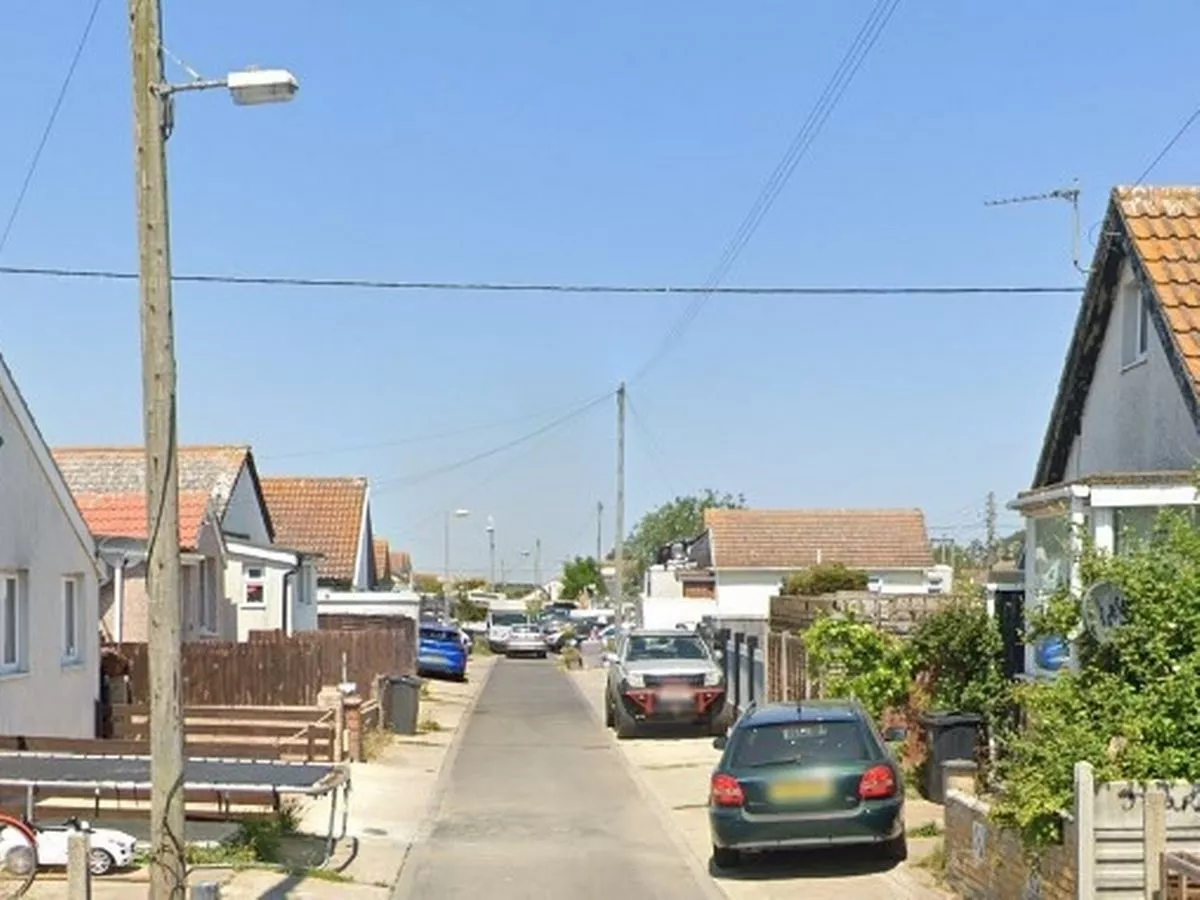
A strip of streets in the Essex village of Jaywick Sands, laid out along the seawall west of Clacton-on-Sea, continues to offer some of the cheapest freehold homes within walking distance of a sandy beach in southern England, with recent auction guides and sales showing prices around £60,000 and, in some cases, lower. The properties—mostly small, timber-framed bungalows dating back to interwar plotland development—sit within a few hundred metres of the North Sea, in lanes such as Brooklands, Brooklands Gardens, Beach Way, Essex Avenue, Midway and Rover Avenue, where auctioneers and agents have listed compact dwellings at entry-level prices unusual for a coastal location within two hours of London. A two-bedroom detached bungalow on Brooklands Gardens sold by auction this autumn for £41,000 against a £38,000 guide, while other nearby addresses, including Midway and Rover Avenue, have been guided at £45,000 to £60,000 and marketed on the basis of proximity to the beach and scope for improvement.
The low headline prices reflect the area’s origins and constraints as much as its access to sea air and sand. Jaywick Sands was built in the 1920s and 1930s as an affordable holiday colony for East Londoners, when plots were sold cheaply and owners constructed lightweight chalets and cabins a short walk from the water. That legacy persists in the housing stock: many homes remain single-storey, timber-framed and modest in footprint, with varying standards of insulation and foundations. Estate particulars underline both the appeal and the limitations. One recent listing for Essex Avenue advertised a “two bedroom timber framed detached bungalow… 50m from the beach,” while a separate seafront chalet on Brooklands promoted balcony views across the sands. The same pages typically caution prospective buyers to verify construction type and mortgageability with lenders. (Sheen’s)
Market data illustrates how Jaywick diverges from neighbouring resorts. Across the ward, average sold prices over the past year have hovered around £160,000–£175,000, according to major portals tracking Land Registry data. Within the streets closest to the seawall, however, prices are more volatile, with a higher share of properties changing hands via cash purchase or auction and with sales frequently below the broader averages. On Essex Avenue, Rightmove’s street-level figures put the average at £85,000 over the past year, consistent with the auction guides seen on nearby roads and with the reality that many of the dwellings remain small and of non-standard construction.
The coastal setting is not cosmetic. The beach at Jaywick is a long, open sweep of sand punctuated by Martello towers and low dunes; in drone footage and estate videos the streets appear to run almost to the shoreline, separated in places by a seawall, promenade and a ribbon of grass. Agents routinely film from the upper storeys of Brooklands houses to show the breakers and the open horizon. For buyers who prize sea access above floor area, that visibility helps explain why compact chalets command attention even when interior photographs show rooms in need of refurbishment and exteriors that hint at decades of salt-weathering.
Set against the sea views is the structural risk that has defined Jaywick’s planning framework for years: most of the area sits in Flood Zone 3, with a high risk from tidal flooding in the event of sea defences being overtopped in a storm surge. The Jaywick Sands Place Plan, commissioned by Tendring District Council, maps depths that could affect ground-floor properties in a design flood event and underlines the need for resilience measures as part of any long-term renewal. The council’s regeneration material, developed with partners including the Environment Agency and Homes England, describes a strategy to improve flood defences, housing quality and the public realm while acknowledging that existing streets such as Brooklands and Grasslands contain many small, ageing plots. Planning decisions and appeal rulings in recent months have rehearsed familiar themes: location within Flood Zone 3a, residual risk despite defences, and the need to balance place-making with safety.

That background helps explain Jaywick’s reputation for bargain seaside homes and the caution with which mortgage lenders sometimes approach the stock. Long-running reporting has tracked the area’s socio-economic challenges and the persistence of unadopted roads and non-standard housing. It is also part of why cash purchases and auctions are common in the lanes closest to the sea, where buyers weigh renovation costs and insurance against the attraction of a plot a minute’s walk from sand. In the same zone, guide prices can be markedly lower than farther inland in Clacton or in newer estates on the edge of Jaywick, where brick dwellings and standard construction broaden lending options.
The contrast with other English seaside markets is stark. Elsewhere on the coast, even modest properties within a short walk of a beach can command sums many multiples higher. While Dorset’s Sandbanks or Hampshire’s Milford-on-Sea sit at the other end of the price spectrum, the broader picture of coastal affordability shows Jaywick among a small group where proximity to water remains compatible with low six-figure or sub-£100,000 entry points. National roundups of seaside prices regularly place Jaywick in the “most affordable” bracket, while acknowledging that buyers are purchasing not just a view but a package that includes planning constraints, flood awareness and, often, significant refurbishment.
Local agents say interest in the cheapest lots spikes when auction catalogues circulate clips of chalets with glimpses of the sea at the end of the road. Individual addresses, anonymised in marketing videos, are easy to place for anyone who knows the grid: Brooklands runs parallel to the shore; Essex Avenue, Beach Way, Midway and Sunbeam Avenue run perpendicular towards the seawall; Brooklands Gardens sits slightly inland but within range of the promenade via short links. The practicalities of ownership are prosaic. Buyers are urged to check the status of roads (some are unadopted), the availability of parking, and the state of services and drainage. For bungalows with timber frames, surveyors recommend attention to sub-floor ventilation, damp proofing and roof condition given salt exposure and wind. Where properties have been extended upward, lenders may ask about the quality of later additions and compliance with building regulations.
Infrastructure and investment plans have begun to reshape the conversation about the area’s trajectory. Tendring’s place plan sets out options for incremental renewal and stronger flood resilience, alongside broader regeneration funding that also touches nearby Clacton. The council has touted a package of projects with central government backing, and promotional material from local civic groups frames the moment as a once-in-a-generation chance to upgrade public spaces and reopen underused sites. The regeneration narrative sits alongside the reality of present-day transactions: while large-scale change is debated, small chalets continue to pass between individual buyers at prices that would be unrecognisable in most southern coastal postcodes.
Residents frequently push back against one-dimensional depictions of Jaywick as bleak. Visitor pieces in recent years have highlighted the beach’s quality, the arts projects that have clustered around the Martello tower, and the enduring attraction of a quiet, open foreshore when the weather holds. In council and community communications, locals describe a tight-knit place where the same families have owned small plots for decades, upgrading gradually as money allows. It is common to see two neighbouring bungalows with very different levels of finish, a visible expression of how piecemeal investment works in a low-cost plotland environment. That variety partly explains the wide spread between the cheapest auction guides and the mid-market asking prices elsewhere in the ward.
For buyers treating the streets as an affordability play, the due diligence checklist is longer than for a conventional suburban purchase. Insurers and mortgage providers weigh flood data carefully, and the government’s mapping tools make it straightforward to check current and long-term flood risk at an exact address. Where properties are leasehold, potential ground rents and the condition of shared access need scrutiny. Because many homes started life as holiday chalets, title boundaries can be idiosyncratic, and historic extensions may predate current standards. Conveyancers familiar with the ward advise confirming building control sign-offs where later works have created upper rooms with sea-facing balconies or inserted bathrooms into former porches.
Auction results over recent months underline that £60,000 is not a notional floor but a live guide in the lanes nearest the beach. Lots advertised around that figure include small bungalows requiring refurbishment or, in some cases, redevelopment on existing footprints. Video tours by local agents dwell on the short walk to the promenade and on the sand visible at the end of lanes. Descriptions emphasise “no onward chain,” the appeal to cash buyers, and the likelihood of post-completion works to bring interiors up to modern expectations. For investors, short-let yields depend on seasonality and on the practicality of smaller floor plans; for owner-occupiers, the calculus is simpler—sea air, a low purchase price and a willingness to accept a chalet’s compromises.
The wider economic picture has long shaped Jaywick’s housing conversation. Media coverage a decade and more ago focused on deprivation metrics and shuttered high streets, sometimes overlooking how the beach itself remained a magnet for day-trippers and how parts of the community were quietly improving homes one paycheck at a time. Today, the headlines have shifted toward regeneration frameworks and the aesthetics of renewal, but the stock on the ground still reflects its origins: a lattice of narrow lanes with a patchwork of homes from different eras and to different standards, all within a short stroll of the water. That geography continues to produce the anomalous listings that draw attention—a freehold by a sandy beach with a guide beginning with a “6” or less.
For those scanning property sites for “beach for less,” the names are now familiar. Brooklands is the spine; the alphabet of perpendicular lanes—Essex Avenue, Beach Way, Midway, Sunbeam, Rover—delivers you to the seawall. On a clear day the horizon opens wide, and the argument for these plots writes itself. The counter-arguments are equally clear in council PDFs and flood maps. That tension, between the romance of a seaside address and the rigours of living beside a dynamic coast, is encoded in every listing and every survey. It is also why the market here will likely remain bifurcated: a small number of modest homes trading hands at auction-level prices close to the beach, and a separate, higher-priced tier for larger, conventional houses farther inland, even within the same postcode. As regeneration money trickles in and defences are upgraded, the fundamentals of the streets by the seawall—small plots, big views, significant constraints—will continue to define the rare corner of Essex where a house by the beach can still be bought for around £60,000.